
- Inicio
- La editorial
- Catálogo
- Temáticas
- Artes
- Biografías, literatura y estudios literario
- Ciencias de la Tierra, geografía, medioambiente, planificación
- Computación y tecnología de la información
- Economía, finanzas, empresa y gestión
- Ficción y temas afines
- Historia, arqueología y filosofía
- Infantil, juvenil y educativo
- Lenguaje y lingüística
- Matemáticas y ciencias
- Medicina, enfermería, veterinaria
- Novela gráfica, cómics, manga, dibujos animados
- Sociedad, ciencias sociales y derecho
- Tecnología, ingeniería, agricultura, procesos industriales
- Colecciones
- Temáticas
- Acceso abierto
- Revistas
- Divulgación
- Distribución
- Ferias FilSMar
- Contacto
¡Actualizamos nuestra plataforma de lectura! Ahora puedes leer tus eBooks desde la app Mon’k. 👉 Conoce cómo
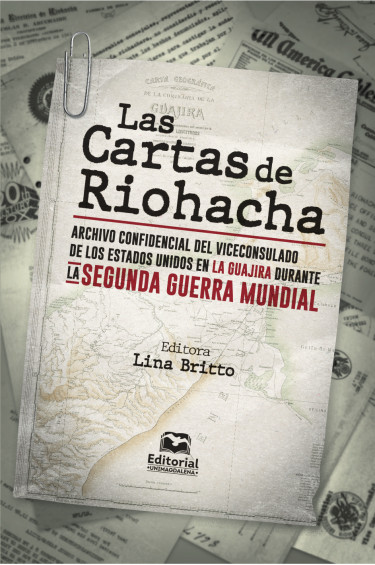
Las cartas de Riohacha
Archivo confidencial del viceconsulado de los Estados Unidos en La Guajira durante la Segunda Guerra Mundial
The Letters from Riohacha
Confidential file from the U.S. Vice Consulate in La Guajira during World War II
Disponibilidad de la publicación
A la venta en este portal

eBook (EPUB)9789587469950COP $59.000
eBook (PDF)9789587469967COP $59.000

Impreso9789587469943COP $84.000

Impreso bajo demanda9789587469943COP $113.621
Debes seleccionar al menos una opción de compra
- Colaboradores
- Terry B. Sanders (Autor)
- Nelson R. Park (Autor)
- Spruille Braden (Autor)
- Lewis E. Leonárd (Autor)
- R. Kenneth Oakley (Autor)
- Teodosio Goenaga (Autor)
- Alejandro Ortega (Autor)
- Carlos Goenaga González (Autor)
- Thomas H. Robinson (Autor)
- Barry T. Benson (Autor)
- Miguel Cotes Barros (Autor)
- D. Chadwick Braggiotti (Autor)
- Arthur Bliss Lane (Autor)
- Nicolás D. Abuchaibe (Autor)
- Vernon L. Fluharty (Autor)
- Gratiniano Gómez (Autor)
- George C. Howard (Autor)
- Lina Britto (Editado por)
La correspondencia condencial
del viceconsulado de los Estados Unidos en Riohacha entre 1940 y 1943 revela
cómo el Gobierno federal de los Estados Unidos en Washington D. C., con
autorización del Gobierno nacional en Bogotá, libró una guerra de baja
intensidad en contra de los aliados comerciales de Alemania Nazi en la
geoestratégica sección norte del antiguo Magdalena Grande durante la Segunda
Guerra Mundial. La agresiva diplomacia llevó a la quiebra la frágil economía
local y puso n a una serie de vínculos que por siglos conectaron esta esquina
del Caribe con los mercados trasatlánticos y el comercio mundial. Este valioso
acervo documental desclasificado y de carácter público, el cual detalla una
coyuntura clave de la historia de Colombia, fue por más de medio siglo
inaccesible para el país, olvidado en los Archivos Nacionales de los Estados
Unidos. Esta obra recoge la gran mayoría de esta documentación y, con
traducciones dedignas al castellano, le ofrece a la sociedad regional y al país
en general un instrumento de memoria, verdad y reparación histórica.
Confidential correspondence from the U.S. Vice Consulate in Riohacha between 1940 and 1943 reveals how the U.S. federal government in Washington, D.C., with the authorization of the Colombian government in Bogotá, waged a low-intensity war against Nazi Germany’s trading partners in the geostrategically important northern section of the former Magdalena Grande region during World War II. This aggressive diplomacy drove the fragile local economy into bankruptcy and severed a series of ties that for centuries had connected this corner of the Caribbean to transatlantic markets and global trade. This valuable collection of declassified and publicly available documents, which details a pivotal moment in Colombia’s history, was inaccessible to the country for more than half a century, forgotten in the U.S. National Archives. This work brings together the vast majority of this documentation and, with high-quality translations into Spanish, offers regional society and the country as a whole a tool for memory, truth, and historical reparation.
[Contenido]
- POL011010 CIENCIAS POLÍTICAS > Relaciones Internacionales > Diplomacia (Principal)
- JPSD Sociedad y ciencias sociales > Política y gobierno (Principal)
- JPSH Sociedad y ciencias sociales > Política y gobierno
- JWKF Sociedad y ciencias sociales > Guerra y defensa
- NHTQ Historia y arqueología > Historia
- NHWR7 Historia y arqueología > Historia
- 327 Sociología y Antropología > Ciencias Políticas > Relaciones Internacionales (Principal)
- Humanidades y Artes - Historia
Estado: Activo
ISBN-13: 9789587469967
DOI: 10.21676/9789587469943.9789587469967
Tipo de contenido del producto: Texto (legible a simple vista)
Protección técnica de publicación digital: Ninguno
Tipo de restricción de uso en publicaciones digitales:
Permiso de uso en publicaciones digitales: No permitido
Idioma del texto: Español
Tamaño del archivo: 11 Megabytes (MB)
Número absoluto de páginas: 430 Páginas
Sello editorial: Editorial Unimagdalena
Tipo de edición: Nueva edición
Número de edición: 1
Ciudad de publicación: Santa Marta
País de publicación: Colombia
Fecha de publicación: 2026-03-18
Tipo de restricción de venta: Exclusivo para un punto o canal de venta
Distribuidor de la editorial: Editorial Unimagdalena
Disponibilidad del producto: Disponible. Sin detalles.
Precio: (COP) 59000
País(es) incluido(s): Colombia
Estado: Activo
ISBN-13: 9789587469950
DOI: 10.21676/9789587469943.9789587469967
Tipo de contenido del producto: Texto (legible a simple vista)
Protección técnica de publicación digital: Ninguno
Tipo de restricción de uso en publicaciones digitales:
Permiso de uso en publicaciones digitales: No permitido
Idioma del texto: Español
Tamaño del archivo: 11 Megabytes (MB)
Número de páginas orientativo de un producto digital: 430 Páginas
Sello editorial: Editorial Unimagdalena
Tipo de edición: Nueva edición
Número de edición: 1
Ciudad de publicación: Santa Marta
País de publicación: Colombia
Fecha de publicación: 2026-03-18
Tipo de restricción de venta: Exclusivo para un punto o canal de venta
Distribuidor de la editorial: Editorial Unimagdalena
Disponibilidad del producto: Disponible. Sin detalles.
Precio: (COP) 59000
País(es) incluido(s): Colombia
Estado: Activo
ISBN-13: 9789587469943
DOI: 10.21676/9789587469943.9789587469967
Idioma del texto: Español
Tamaño: 16 x 23 cm
Peso: 0.556 kg
Número de páginas del contenido principal: 430 Páginas
Sello editorial: Editorial Unimagdalena
Tipo de edición: Nueva edición
Número de edición: 1
Ciudad de publicación: Santa Marta
País de publicación: Colombia
Fecha de publicación: 2026-03-18
Tipo de restricción de venta: Exclusivo para un punto o canal de venta
Distribuidor de la editorial: Librantida
Disponibilidad del producto: Impresión bajo demanda (POD)
Precio: (ARS) 114417.6
Precio: (COP) 113621
Precio: (MXN) 651
Precio: (USD) 66
Estado: Activo
ISBN-13: 9789587469943
DOI: 10.21676/9789587469943.9789587469967
Idioma del texto: Español
Tamaño: 16 x 23 x 2 cm
Peso: 0.556 kg
Número de páginas del contenido principal: 430 Páginas
Sello editorial: Editorial Unimagdalena
Tipo de edición: Nueva edición
Número de edición: 1
Ciudad de publicación: Santa Marta
País de publicación: Colombia
Fecha de publicación: 2026-03-18
Tipo de restricción de venta: Exclusivo para un punto o canal de venta
Distribuidor de la editorial: Editorial Unimagdalena
Disponibilidad del producto: Disponible. Sin detalles.
Precio: (COP) 84000
País(es) incluido(s): Colombia
General / "Trade"
Destinatarios del contenido: Sin restricción
Digital (suministrado electrónicamente) - PDF
- Editorial Unimagdalena: https://libros.unimagdalena.edu.co/las-cartas-de-riohacha-v9lec.html
Digital (suministrado electrónicamente) - EPUB
- Editorial Unimagdalena: https://libros.unimagdalena.edu.co/las-cartas-de-riohacha-v9lec.html
Libro - Con solapas
- Editorial Unimagdalena: https://libros.unimagdalena.edu.co/las-cartas-de-riohacha-v9lec.html
Tapa blanda o Bolsillo - Con solapas
- Editorial Unimagdalena: https://libros.unimagdalena.edu.co/las-cartas-de-riohacha-v9lec.html