
- Inicio
- La editorial
- Catálogo
- Temáticas
- Artes
- Biografías, literatura y estudios literario
- Ciencias de la Tierra, geografía, medioambiente, planificación
- Computación y tecnología de la información
- Economía, finanzas, empresa y gestión
- Ficción y temas afines
- Historia, arqueología y filosofía
- Infantil, juvenil y educativo
- Lenguaje y lingüística
- Matemáticas y ciencias
- Medicina, enfermería, veterinaria
- Novela gráfica, cómics, manga, dibujos animados
- Sociedad, ciencias sociales y derecho
- Tecnología, ingeniería, agricultura, procesos industriales
- Colecciones
- Temáticas
- Acceso abierto
- Revistas
- Divulgación
- Distribución
- Ferias FilSMar
- Contacto
¡Actualizamos nuestra plataforma de lectura! Ahora puedes leer tus eBooks desde la app Mon’k. 👉 Conoce cómo
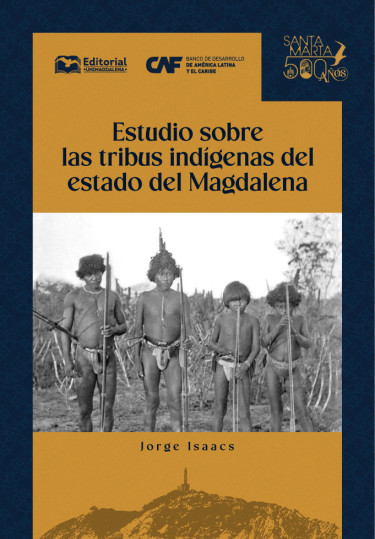
Estudio sobre las tribus indígenas del estado del Magdalena
Study on the indigenous tribes of the state of Magdalena
Santa Marta 500 años
Disponibilidad de la publicación
A la venta en este portal

Impreso9789587467413COP $62.000

Impreso bajo demanda9789587467413COP $66.898
Debes seleccionar al menos una opción de compra

Estudio sobre las tribus indígenas del estado del Magdalena, de Jorge Isaacs, es el resultado de una investigación pionera sobre etnias como los wayuu, los arhuacos y los chimilas, registrando mitos, costumbres y estructuras sociales con una mirada innovadora que rechazó el eurocentrismo y denunció el abandono estatal hacia estas comunidades. Más que un estudio etnográfico, este texto es un testimonio histórico que preservó tradiciones orales en riesgo de desaparecer y anticipó principios metodológicos de la antropología moderna: el autor combina su gran sensibilidad artística con la observación participante, el registro lingüístico comparativo y la crítica social y política, para entregarnos una obra que, por su audacia, fue censurada y casi desaparecida de la historiografía nacional. Ahora, como parte de la Colección Santa Marta 500 años, la Editorial Unimagdalena, con auspicio del Banco de desarrollo de América Latina y el Caribe (CAF), edita esta obra, acompañada de bellas fotografías de la época, notas del escritor y apuntes idiomáticos y críticos. Su lectura invita a reflexionar sobre las raíces multiculturales de Colombia y la necesidad de proteger nuestros saberes ancestrales.
Study on the Indigenous Tribes of the State of Magdalena, by Jorge Isaacs, is the result of a pioneering investigation into ethnic groups such as the Wayuu, Arhuaco, and Chimila. The author records their myths, customs, and social structures through an innovative lens that rejects Eurocentrism and denounces the state’s neglect of these communities. More than an ethnographic study, this work is a historical testimony that preserved oral traditions at risk of disappearing and anticipated key methodological principles of modern anthropology. Isaacs combines his artistic sensitivity with participant observation, comparative linguistic documentation, and sharp social and political critique to deliver a work that, due to its boldness, was censored and nearly erased from national historiography. Now, as part of the Santa Marta 500 Years Collection, Unimagdalena Press—sponsored by the Development Bank of Latin America and the Caribbean (CAF)—presents this new edition, enriched with period photographs, the author’s original notes, and linguistic and critical annotations. Its reading invites deep reflection on Colombia’s multicultural roots and the urgent need to protect ancestral knowledge.
- HIS033000 HISTORIA > America latina > Sudamerica
- NHK Historia y arqueología > Historia
- 1KLS Calificadores de Lugar > América
- JHMC Sociedad y ciencias sociales > Sociología y antropología (Principal)
- 900 Geografía e historia > Historia mundial > Geografía e historia (Principal)
- Santa Marta 500 años
Estado: Activo
ISBN-13: 9789587467406
DOI: 10.21676/9789587467413.9789587467406
Tipo de contenido principal: Texto (legible a simple vista)
Tipo de contenido del producto: Texto (legible a simple vista)
Protección técnica de publicación digital: Ninguno
Tipo de restricción de uso en publicaciones digitales:
Permiso de uso en publicaciones digitales: No permitido
Idioma del texto: Español
Número absoluto de páginas: 246 Páginas
Tamaño del archivo: 30.1 Megabytes (MB)
Sello editorial: Editorial Unimagdalena
Tipo de edición: Nueva edición
Número de edición: 1
Ciudad de publicación: Santa Marta
País de publicación: Colombia
Fecha de publicación: 2024-08-08
Tipo de restricción de venta: Exclusivo para un punto o canal de venta
Distribuidor de la editorial: Editorial Unimagdalena
Disponibilidad del producto: Disponible. Sin detalles.
Estado: Activo
ISBN-13: 9789587467420
DOI: 10.21676/9789587467413.9789587467406
Tipo de contenido principal: Texto (legible a simple vista)
Tipo de contenido del producto: Texto (legible a simple vista)
Protección técnica de publicación digital: Ninguno
Tipo de restricción de uso en publicaciones digitales:
Permiso de uso en publicaciones digitales: No permitido
Idioma del texto: Español
Tamaño del archivo: 30.1 Megabytes (MB)
Número de páginas orientativo de un producto digital: 246 Páginas
Sello editorial: Editorial Unimagdalena
Tipo de edición: Nueva edición
Número de edición: 1
Ciudad de publicación: Santa Marta
País de publicación: Colombia
Fecha de publicación: 2024-08-08
Tipo de restricción de venta: Exclusivo para un punto o canal de venta
Distribuidor de la editorial: Editorial Unimagdalena
Disponibilidad del producto: Disponible. Sin detalles.
Estado: Activo
ISBN-13: 9789587467413
DOI: 10.21676/9789587467413.9789587467406
Idioma del texto: Español
Tamaño: 16 x 23 x 1.7 cm
Peso: 0.32 kg
Número de páginas del contenido principal: 188 Páginas
Sello editorial: Editorial Unimagdalena
Tipo de edición: Nueva edición
Número de edición: 1
Ciudad de publicación: Santa Marta
País de publicación: Colombia
Fecha de publicación: 2024-08-08
Tipo de restricción de venta: Exclusivo para un punto o canal de venta
Distribuidor de la editorial: Librantida
Disponibilidad del producto: Impresión bajo demanda (POD)
Precio: (ARS) 62409.6
Precio: (COP) 66898
Precio: (MXN) 343
Precio: (USD) 36
Estado: Activo
ISBN-13: 9789587467413
DOI: 10.21676/9789587467413.9789587467406
Idioma del texto: Español
Tamaño: 16 x 23 x 1.7 cm
Peso: 0.32 kg
Número de páginas del contenido principal: 246 Páginas
Sello editorial: Editorial Unimagdalena
Tipo de edición: Nueva edición
Número de edición: 1
Ciudad de publicación: Santa Marta
País de publicación: Colombia
Fecha de publicación: 2024-08-08
Tipo de restricción de venta: Exclusivo para un punto o canal de venta
Distribuidor de la editorial: Editorial Unimagdalena
Disponibilidad del producto: Disponible. Sin detalles.
Precio: (COP) 62000
País(es) incluido(s): Colombia
General / "Trade"
Destinatarios del contenido: Sin restricción
Digital (suministrado electrónicamente) - PDF
- Editorial Unimagdalena: https://libros.unimagdalena.edu.co/las-tribus-indigenas-del-magdalena-q5pxi.html
Digital (suministrado electrónicamente) - EPUB
- Editorial Unimagdalena: https://libros.unimagdalena.edu.co/las-tribus-indigenas-del-magdalena-q5pxi.html
Libro - Con solapas
- Editorial Unimagdalena: https://libros.unimagdalena.edu.co/las-tribus-indigenas-del-magdalena-q5pxi.html
Tapa blanda o Bolsillo - Con solapas
- Editorial Unimagdalena: https://libros.unimagdalena.edu.co/las-tribus-indigenas-del-magdalena-q5pxi.html
Productos relacionados
Año de publicación2025AutorAlberto Rivera Gutiérrez
Vida material y metáfora social en La Guajira
Año de publicación2025AutorDaniel Antonio Pérez Cerro y otros
Territorio y escuela en los imaginarios interculturales del río Sinú

Año de publicación2024AutorLorena Torres Higuera y otros
Fronteras identitarias y justicia indígena en la Sierra Nevada de Santa Marta
Año de publicación2024AutorAntonio Julián y otros
La Perla de la América, provincia de Santa Marta

Año de publicación2020AutorRoberto Almanza Hernández y otros
Teorizando desde los pequeños lugares

Año de publicación2020AutorFabio Silva Vallejo y otros
Vida campesina en el Magdalena Grande

Año de publicación2020AutorAndrea Llinás Vahos
Reclusas de la Cárcel Rodrigo de Bastidas de Santa Marta

Año de publicación2019AutorEliana Milena Toncel Mozo y otros
Entre el Agua y la Tierra

Año de publicación2009AutorJorge Enrique Elías Caro y otros
Cultura y sociedad: orientaciones para el ser humano en las organizaciones

Año de publicación2008AutorRasine Ravelo Méndez y otros