
- Inicio
- La editorial
- Catálogo
- Temáticas
- Artes
- Biografías, literatura y estudios literario
- Ciencias de la Tierra, geografía, medioambiente, planificación
- Computación y tecnología de la información
- Economía, finanzas, empresa y gestión
- Ficción y temas afines
- Historia, arqueología y filosofía
- Infantil, juvenil y educativo
- Lenguaje y lingüística
- Matemáticas y ciencias
- Medicina, enfermería, veterinaria
- Novela gráfica, cómics, manga, dibujos animados
- Sociedad, ciencias sociales y derecho
- Tecnología, ingeniería, agricultura, procesos industriales
- Colecciones
- Temáticas
- Acceso abierto
- Revistas
- Divulgación
- Distribución
- Ferias FilSMar
- Contacto
¡Actualizamos nuestra plataforma de lectura! Ahora puedes leer tus eBooks desde la app Mon’k. 👉 Conoce cómo
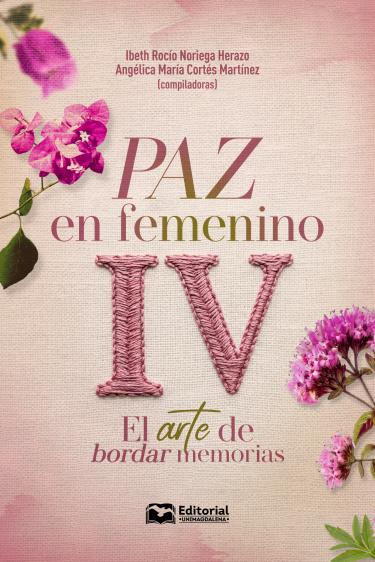
Paz en femenino IV
El arte de bordar memorias
Peace in the Feminine IV
The Art of Embroidering Memories
Disponibilidad de la publicación
A la venta en este portal

ImpresoPróximamente
- Colaboradores
- Ibeth Rocío Noriega Herazo (Compilado por)
- Angélica María Cortés Martínez (Compilado por)
- Anja Puentes Pankau (Autor)
- Glenys Giomar Arévalo Fontalvo (Autor)
- Gorawin Torres Chaparro (Autor)
- Oriana Patricia Russo Manjarrés (Autor)
- María Clara Rambao Almanza (Autor)
- Scampoly Jiménez Daza (Autor)
- Lina Marcela Cardona Cabas (Autor)
- Adela del Pilar Cassís de Mora (Autor)
- Melanniveth Diaz Pernett (Autor)
- Gina Marcela Hernández Orozco (Autor)
- Caroline Daniela Romero Suárez (Autor)
- Carolina Cuadro Fernández (Autor)
- Fiorella Sofía García Suárez (Autor)
- Melina Paola Quintero Santos (Autor)
- Aura Nataly Guzmán Padilla (Autor)
- Angie Paola Montero Lagos (Autor)
- María Clara Riascos Nigrinis (Autor)
- Sofía Isabel Torres Díaz (Autor)
- Beatriz Rosmery Licona Castillo (Autor)
Hay manos que remiendan silencios, hilvanan tristezas y, al final del día, se cosen a sí mismas. De esa paciencia está hecho este libro. "Paz en femenino IV. El arte de bordar memorias" continúa un camino que empezó como semilla y hoy es tejido: el de las mujeres del Caribe colombiano que se reúnen, año tras año, para decir con su propia voz lo que durante mucho tiempo se contó desde afuera. En esta cuarta entrega, la palabra viaja del mar a la montaña: llega en kriol desde San Andrés, en lengua ikʉn desde Nabusimake, y se detiene en las orillas del Magdalena, en la ciénaga, en el manglar que agoniza, en la mecedora donde una madre borda sus angustias. Poetas, narradoras y artistas visuales de distintas edades y territorios recogen aquí la herencia de las abuelas, el cuerpo como territorio, la maternidad, el desamor, la espera de quien no vuelve y la alegría de nombrarse. Cada puntada es distinta, pero todas sostienen la misma tela. Porque la sensibilidad femenina no es fragilidad: es una manera de mirar que repara, acoge y resiste. Es la buganvilia que crece sin permiso en el muro gris, la tejedora que piensa el tiempo mientras teje, la voz que por fin se siente en casa. Este libro es un convite tejido a muchas manos. Basta abrirlo para escuchar el coro.
There are hands that mend silences, stitch together sorrows, and, at the end of the day, sew themselves together. This book is woven from that patience. “Paz en femenino IV. The Art of Embroidering Memories” continues a journey that began as a seed and is now a tapestry: that of the women of the Colombian Caribbean who gather, year after year, to speak in their own voices about what was long told from the outside. In this fourth installment, the word travels from the sea to the mountains: it arrives in Kriol from San Andrés, in the Ikʉn language from Nabusimake, and comes to rest on the banks of the Magdalena River, in the marsh, in the dying mangrove forest, and in the rocking chair where a mother embroiders her anguish. Poets, storytellers, and visual artists of different ages and from different regions gather here to explore the legacy of their grandmothers, the body as territory, motherhood, heartbreak, the waiting for those who do not return, and the joy of naming oneself. Each stitch is different, but they all hold the same fabric together. Because feminine sensitivity is not fragility: it is a way of seeing that repairs, welcomes, and resists. It is the bougainvillea that grows without permission on the gray wall, the weaver who contemplates time as she weaves, the voice that finally feels at home. This book is a feast woven by many hands. Just open it to hear the chorus.
[Contenido]
- FIC003000 FICCIÓN > Antologías (múltiples autores) (Principal)
- FB Ficción y temas afines > Ficción: general y literaria
- DCQ Biografías, literatura y estudios literarios > Poesía (Principal)
- 860 Literatura y retórica > Literaturas españolas y portuguesas > Literatues españoles y portugueses (Principal)
Estado: Próxima aparición
ISBN-13: 9786287947603
DOI: 10.21676/9786287947603.9786287947610
Idioma del texto: Español
Tamaño: 14 x 21 x 1 cm
Peso: 0.176 kg
Número de páginas del contenido principal: 180 Páginas
Sello editorial: Editorial Unimagdalena
Tipo de edición: Nueva edición
Número de edición: 1
Ciudad de publicación: Santa Marta
País de publicación: Colombia
Fecha de publicación: 2026-12-07
Distribuidor de la editorial: Editorial Unimagdalena
Disponibilidad del producto: Disponible. Sin detalles.
Precio: (COP) 42000
País(es) incluido(s): Colombia
Tapa blanda o Bolsillo - Con solapas
- Editorial Unimagdalena: https://libros.unimagdalena.edu.co/paz-en-femenino-iv-12zfu.html
Productos relacionados

Año de publicación2025AutorIbeth Rocío Noriega Herazo y otros
Paz en femenino III

Año de publicación2020AutorGustavo H. Arrieta López y otros